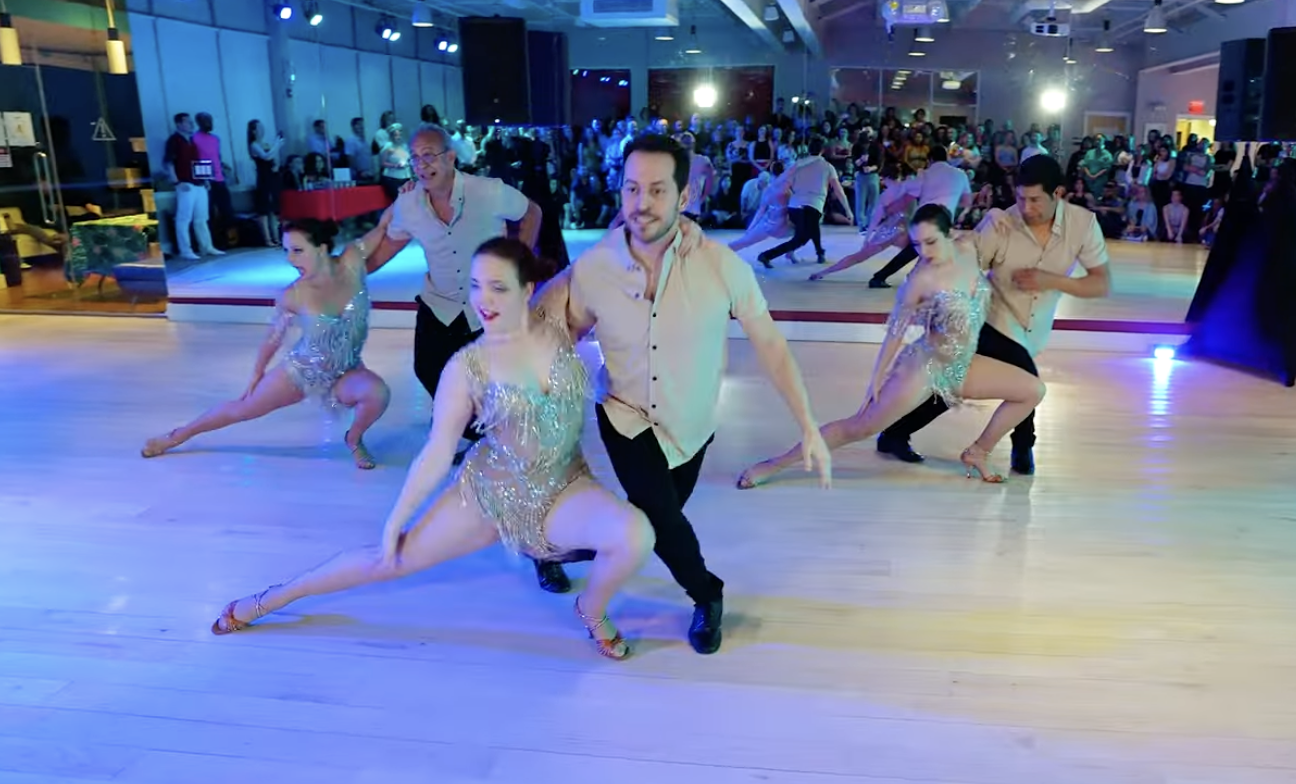
👋 Hey everybody, Rae here.
I dance with Fluere, and in my day job, I’m the co-founder of DNNR and Freedom Village. Running a startup is all-consuming, so people sometimes ask how I make time for Fluere.
The answer is simple: dancing with Fluere unlocks everything else.
When I have a performance on the horizon, I’m more motivated to sleep well, eat well, and exercise (gotta look cute in the costume AND have the stamina to get through the insane choreo).
Those habits, in turn, make me sharper, more creative, and happier in every part of my life. Dance doesn’t compete with everything else I’m building—it helps make it possible.
I’m heading into my fourth season on the Fluere styling team, and one of the most encouraging things I’ve learned is how much you can improve when you give yourself the time to practice consistently.
If you’re new, some of the choreography might feel impossibly fast. You might see another dancer and wonder how they remember everything, make it look effortless, or get their body to do a particular move. It’s easy to assume that’s just raw talent. What’s harder to see is all the practice that made it possible—and how much of that progress is available to you, too.
We often overestimate what we can accomplish in a day and underestimate what we can accomplish in a year. A dance season is long enough to experience that for yourself.
You don’t have to feel like a strong dancer today to become a much stronger dancer by the end.
There’s a racing concept called the holeshot: getting a strong start before the course narrows. The beginning of our season is an opportunity like that. Locking in to learn each week’s choreography while it’s fresh gives you a foundation that makes everything afterward easier.
Every skill you learn today compounds in the future. Every move you learn (suzie q, spot turns, swing step) is a building block you will call on over and over again. Once you learn that move completely, your brain will compress it, making it faster and easier to learn more choreography in the future.
The goal of each week is to arrive at the next rehearsal able to dance the previous section alone, at speed — even if it’s not perfect. Focus on the footwork and body movement first. Once you know what comes next in your muscle memory, you have more attention available for your arms, timing, expression, and all the little details that make dancing beautiful.
You can build that confidence through short practices spaced throughout the week (ideally every day). “Spaced repetition” is proven to be more effective than long practice sessions or last minute cramming.
Try the choreography the day after rehearsal, revisit it daily even if for a short time, and run it again right before the next class. Notice where you hesitate, practice that section, and try again.
There will probably be days or weeks when you feel like you’re getting worse instead of better. This is probably because you have raised your standards, and it's completely normal. And although it can feel defeating, as long as you know you’re practicing, you can trust that something is happening beneath the surface. That doesn’t necessarily mean you’re not improving. You’re learning something that hasn’t become muscle memory yet.
Each return gives you another chance to remember, correct, and settle into the movement. Film yourself and watch it back.
Those small sessions may not feel dramatic. But week after week, they add up big time. Instead of relearning old choreography while absorbing new counts, you’re building on something you already know.
Rae: I grew up singing in choirs and musicals. During covid I taught myself some piano and spent a lot of time singing at home. It was the most singing I had done in years actually, but when the world opened back up and I went to karaoke, I was incredibly nervous. This shocked me because I used to do karaoke weekly and loved it. My singing muscles were strong. My performing muscles were not.
Dancing in front of others in class is part of the practice, too.
Lili: I echo this for the people in the back! I remember vividly how my brain was fully freezing when I was on the spot my first year. I get nervous and embarrassed now too, but it is completely different than what it was then. I think it is one of the most beneficial "tortures".
Performing is both physical and mental: remembering the choreography while being watched, staying present through nerves, and continuing even if you miss a count. Putting yourself out there is a muscle you can train, just like your body. Try dancing a section for a teammate or a friend, and take opportunities to perform in rehearsal before you feel completely ready. Each experience helps you learn the dance under the conditions you’ll actually perform it. You can build comfort in the spotlight throughout the season. And if you mess up, just smile at yourself and try again. We’re all rooting for you 100%.
Being ready earlier can also help you settle into a consistent place in the formations. That gives you more time to get comfortable with your transitions and enjoy performing. It’s another way the work you do now can make the later months feel easier.
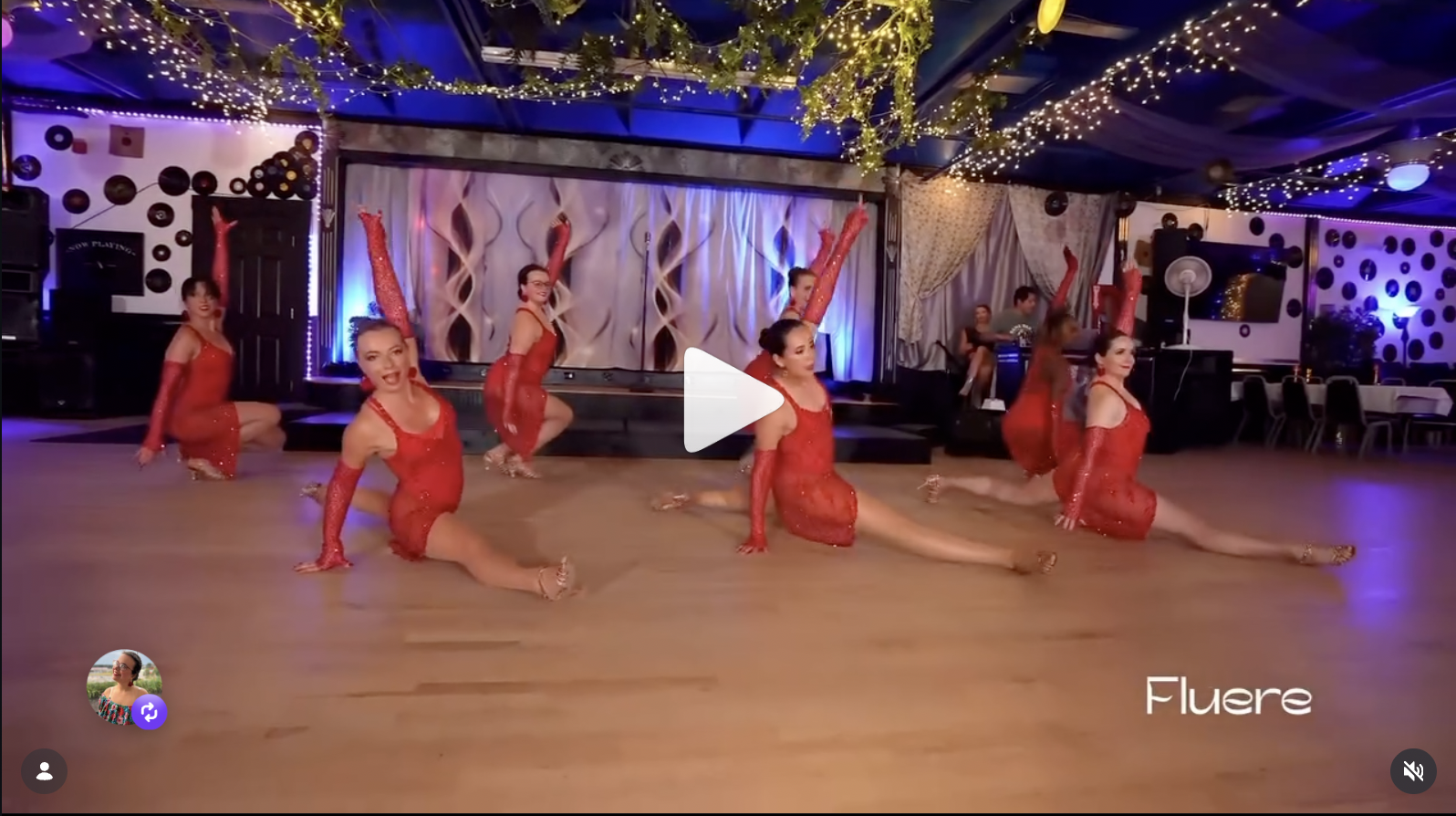
The same principle applies to physical skills. Last season we had an opening move that dropped from standing into a split. It looked daunting, but we had roughly five months to prepare. Flexibility develops gradually, and starting early gives your body time to adapt.
Everyone’s body and starting point are different, but a move that feels far away today may become much more accessible with patient, consistent work faster than you think possible.
Doing the split exercise video a few times a week resulting in this come performance time:
Rae: I experienced this with strength as well. In a partnering routine a few years back, we had a double turn into a deep lunge. I struggled to get low quickly and come back out cleanly, so I trained specifically for that movement at the gym—just doing the movement while holding weights. By performance time, I could do a beautiful, deep lunge with confidence. My difficulty showed me what to work on—and actively working on it changed what I could do.
Side leg lunges every week to build strength:
Turned into a beautiful double turn into deep lunge:
If you have 15 minutes a day, give those minutes a purpose. Practice the counts you keep forgetting, work on your balance, or build the strength and mobility a particular move needs. You don’t need to improve everything at once. Choose something useful, return to it consistently, and let yourself discover what happens. For example, “For this run through I’m going to focus on getting the footwork correct. Next I’m going to focus on timing”.
Life and work keep me incredibly busy, but I stay committed to the team because dance motivates so many other things that make my life better. When I’m working toward a performance, I want to feel strong and fit. I eat healthier and become more committed at the gym. Those habits give me more energy and help me do better at work, and the virtuous cycle continues. Having something I’m excited to train for helps me follow through.
For many of us, this might be our first experience giving our bodies months of focused practice to develop a demanding skill. There’s something incredibly fulfilling about discovering what you can do—and doing it alongside a group of people working toward the same goal.
The dancers you admire want you to feel confident and look wonderful alongside them. Our shared timing, lines, transitions, and energy create the show together. Every bit of progress you make adds to what we can create as a group.
At the beginning of a season, it’s hard to picture how different you might feel by the end. Give yourself the chance to find out. When we finish the season with a stunning video, you’ll see more than a beautiful routine. You’ll see the skills you built, the practices you made time for, the challenges you pushed through, and what we accomplished together.
You’ll be proud of the performance—and proud of yourself for becoming someone who can do it.